

World Suicide Prevention Day, 10 September 2026
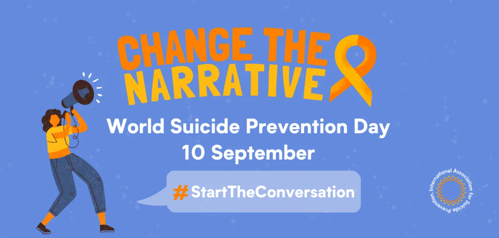
World Suicide Prevention Day takes place on 10th of September. The international theme is Changing the Narrative on Suicide.
The aim of the theme is to raise awareness about the importance of changing the narrative surrounding suicide. Changing the narrative is about shifting from a culture of silence and stigma to one of openness, understanding and support.
Developed by Mental Health First Aid Ireland, in partnership with St John of God University Hospital and to support the ongoing An Garda Siochana Mental Health First Aid Programme. Please see below some helpful information on practical ways to start the conversation, listen and help someone connect with the appropriate supports.
You do not need to have all the answers to start the conversation.
Worried about someone? What to say and what to do next
Sometimes you may notice that someone you know isn't quite themselves. They may seem quieter, withdrawn, overwhelmed or just different. You might want to check in, however you are unsure of what to say.
A simple, genuine conversation can let someone know that you have noticed, that you care and that they don't have to face things alone.
Start with what you've noticed
You may have noticed a change in someone’s mood, behaviours or circumstances, or something they have said may have concerned you. You do not need to be certain before checking in. Keep it simple and avoid making assumptions. You could say: “I've noticed you haven't seemed yourself lately. How are you doing?” “I'm a bit worried about you. Do you want to talk?” “I've noticed things seem difficult for you at the moment. How are things?” “I'm here if you want to talk. No pressure.” |
Listen more than you talk
If they do open up, give them time. Listen without judgement and take what they say seriously. You don't have to solve the problem. “That sounds really difficult “I'm glad you told me.” “Can you tell me a little more?” “What do you think would help?” Try not to minimise how they feel with comments such as “it's not that bad” or “things will get better”. Even when well-intended, these can close down the conversation. |
What if they don't want to talk?
Don't give up on them. Let them know you are there if they do want to talk, and consider checking in again later. Sometimes knowing that someone cares is the first step. |
If you're worried about suicide
If you are concerned that someone may be thinking about suicide, ask directly and calmly: “Are you thinking about suicide?” Asking directly does not put the idea into someone's head. If they say yes, stay calm, listen and take them seriously. Help them connect with appropriate support. If there is immediate danger, call 999. |
You don’t have to fix it
Mental Health First Aid is about recognising when someone may be struggling, listening with empathy, and helping them connect with the right support. You are not expected to diagnose someone or become their counsellor. A practical next step might be helping them contact their GP, a mental health professional, a trusted person or an appropriate support service. |
Support for Garda personnel
If you're worried about a colleague, or you're struggling yourself, support is available within An Garda Síochána. Don’t wait until things become overwhelming before reaching out.
Education:
To build your practical skills and confidence in these conversations, consider signing up for an AGS Mental Health First Aid (MHFA) workshop. Organised through your local Divisional office, MHFA co-ordinators, these sessions provide our personnel with an internationally recognized framework to notice signs of distress, listen non-judgmentally, and safely guide a peer toward professional supports like our Employee Support Programme (ESP)."
|
Start the Conversation. Change the Narrative. |
Garda National Health and Wellbeing Office — Keeping Our People Supported (KOPS)