

Testicular Cancer | Men’s Health Awareness Month
Part 4 of a Four-Part KOPS series
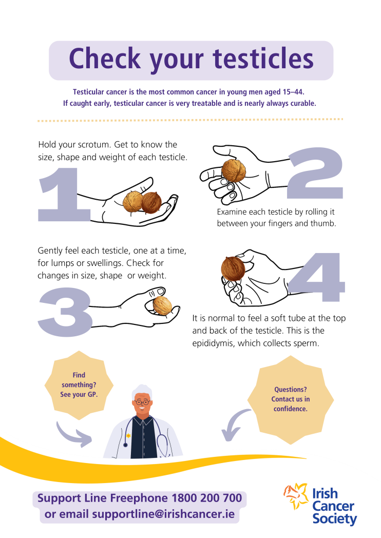
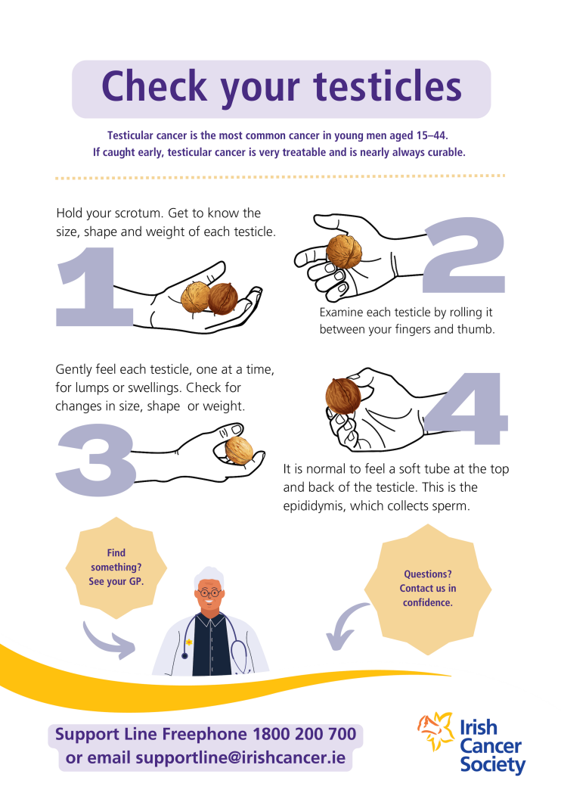 Irish Cancer Society: Check your testicles infographic A4
Know Your Body. Don't ignore the Changes.
Testicular cancer affects about 175 men in Ireland each year. It is the most common cancer diagnosed in young men aged between 15 and 34 years.* |
What is testicular cancer?
Testicular cancer develops when cells in one or both testicles begin to grow abnormally. The cancer can affect how the testicles work normally. It usually effects one testicle, although it can occasionally affect both.
Testicular Cancer is relatively uncommon, but it is the most commonly diagnosed cancer in young men aged between 15 and 34. The encouraging news is that testicular cancer is very treatable and is nearly always curable particularly when identified early.
The facts in Ireland:
- Approximately 170 men are diagnosed each year.
- It is the most common cancer in men aged 15-34.
- It can affect men at other ages too.
- It is highly treatable and is nearly always curable.
Who is at greater risk?
Testicular cancer can affect any man. However, some factors can increase the risk.
- Undescended testicle: those who were born with a testicle that did not come down into the scrotum before they were born.
- Family history: your risk may be higher if your father or brother has had testicular cancer.
- Previous testicular cancer: if you had testicular cancer, there is a slightly increased risk of developing it in the other testicle.
- Fertility problems: Certain fertility problems are associated with a slightly increased risk. A vasectomy does not increase your risk of developing testicular cancer.
- Ethnic background: Testicular cancer is more common in white men than in men from some other ethnic backgrounds.
Having one or more risk factors does not mean you will develop testicular cancer. Equally, men without known risk factors can still develop it.
Know the signs. Get to know what is normal for you.
One of the most important things you can do is become familiar with how your testicles normally look and feel.
Changes to look out for include:
- A lump or swelling in either testicle.
- One testicle becoming larger than usual.
- A change in the shape or feel of a testicle.
- A feeling of heaviness in the scrotum
- A dull ache or discomfort in a testicle or scrotum
- Pain or discomfort in the groin or lower abdomen
Some men may also experience:
- Persistent lower back pain
- Abdominal discomfort
- Swollen lymph glands
- Shortness of breath, particularly if the cancer has spread.
Important: a lump or swelling is not necessarily cancer. Many testicular changes are caused by less serious conditions, including cysts, infections, or fluid build-up.
However, any new or unusual change should be checked by your GP. Do not wait for a lump to become painful. Testicular cancer can present as a painless lump.
How do you check your testicles?
You may find it easier to check during or after a warm shower or bath, when the scrotum is relaxed.
Important: A sudden, severe testicular pain requires immediate medial assessment at emergency department. It can be caused by testicular torsion, a medical emergency that needs urgent treatment.
Can you reduce your risk?
There is no guaranteed way to prevent prostate cancer. Some risk factors, such as age and inherited genes, cannot be changed. However, looking after your general health is always worthwhile.
- Keep active: Aim for regular physical activity.
- Eat well: Include plenty of vegetables, fruit and wholegrains.
- Maintain a healthy weight: This supports your overall health.
- Know your family history: Find out whether close relatives have had prostate cancer.
- Pay attention to changes: Don’t ignore persistent urinary symptoms or other unusual signs.
- Talk to your GP: Discuss your individual risk and whether a PSA test is appropriate.
Look out for the men in your life.
Partners, parents, brothers, friends, and colleagues can all help encourage men to take their health seriously.
You can:
- Encourage younger men to become familiar with their bodies.
- Talk openly about testicular health and help remove the embarrassment.
- Encourage someone to contact a GP if they notice the change.
- Check in with someone who may be worried about symptoms or a diagnosis.
- Offer practical support including helping someone arrange an appointment.
KNOW YOUR BODY. DON’T IGNORE THE CHANGES. |
Supports:
24/7 freephone: 1800 817 433Lena by Inspire – Employee Support Programme (ESP) An Garda Síochána’s partnership with Lena by Inspire provides a free, independent and confidential counselling and support service for Garda personnel. It is available 24 hours a day, 365 days a year. Personnel can self-refer at any time – no permission or approval is required, and you do not need to be in crisis to call. A counsellor is available for crisis situations. For current details and access information, consult the – KOPS Lena by Inspire Counselling page.
|
 Support Line on 1800 200 700 or visit a Daffodil Centre to speak with a cancer nurse.
 Free Counselling - Lena by Inspire

References and Further Reading
- Irish Cancer Society Testicular cancer
- Testicular Cancer - Marie Keating Foundation
- NCCP_Testicular_Exam.pdf
- National Cancer Registry Ireland
- KOPS – Men’s Health Awareness Month, Part 1 of a Four-Part Series: Mental Health
- KOPS - Prostate Cancer | Men’s Health Awareness Month - Health & Wellbeing - KOPS
This article is for general information only and is not a substitute for medical advice. If you have any concerns about your health, please speak to your GP.

Garda National Health and Wellbeing Office — Keeping Our People Supported (KOPS)